
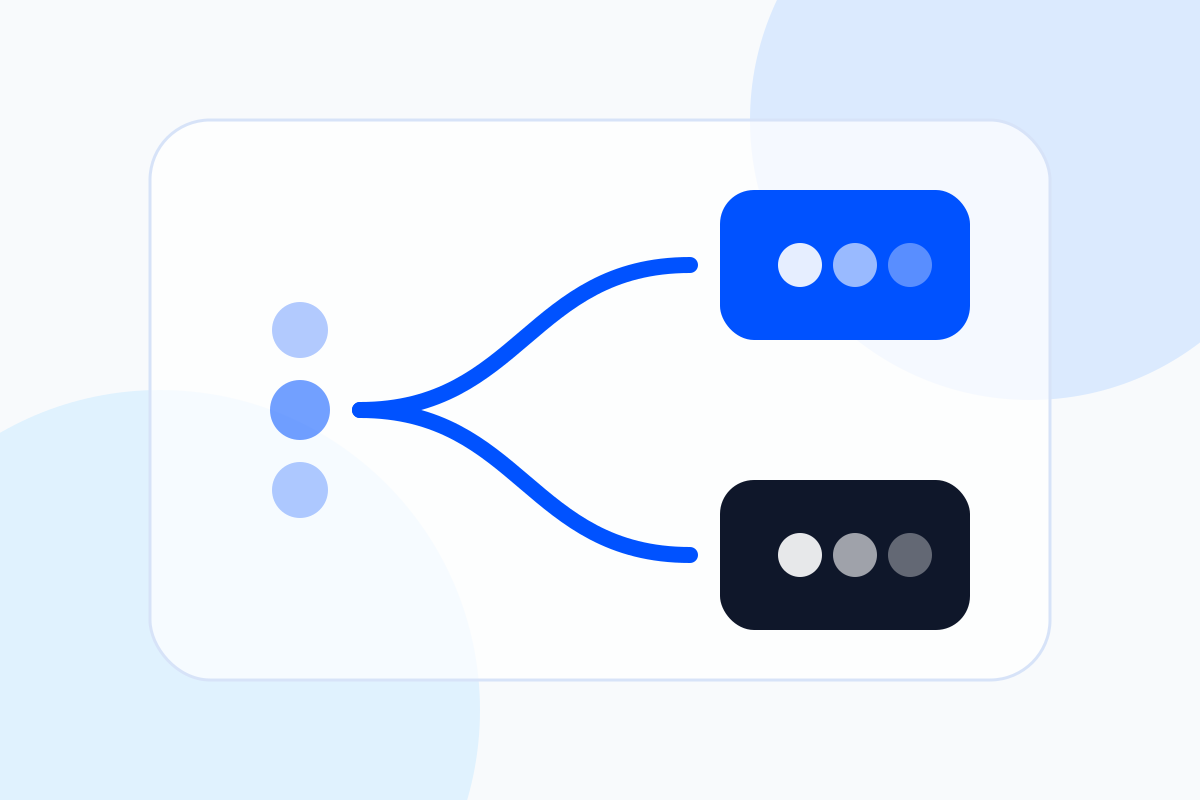
Your list is not one audience
Every store has one marketing calendar and one send button. The welcome email, the new-arrival announcement, the sale reminder — they all go to the same list. A subscriber who joined last week and a customer placing a fifth order read the same subject line, the same offer, the same everything. On a small list that feels efficient. In practice it is the most common retention leak in ecommerce, because the two people are not in the same relationship with your brand at all.
One of them is still deciding whether the purchase was a good call. The other already decided, more than once, and wants to be treated like it. A single message cannot serve both: it either oversells to someone who needs reassurance, or under-delivers to someone who has already earned the good stuff. Either way one of them gets mail written for the other, and that mismatch is what trains people to tune you out.
What each side actually needs
A first-time buyer is inside a window — usually the first thirty days after the first order — where the only question that matters is whether they made the right call. What moves them is validation, a little product education, and a clear sense of what happens next. What does not move them is a cross-sell before the order has even arrived, or loyalty language they have not earned. Reaching for the next order too early is what turns a one-time buyer into a one-time buyer.
A repeat buyer is the opposite problem. They already trust you, so the job is relevance and recognition: recommendations that actually connect to what they bought, first look at something new, an acknowledgement that they are not a stranger on your list. The message they should never receive is the same blanket discount you sent a one-time buyer, because every generic promotion to a loyal customer is a small withdrawal from the relationship you spent money to build.
Put plainly, one group needs proof and patience, the other needs relevance and recognition. Notice that a coupon does not appear in either list. The discount is what stores reach for when they have nothing more specific to say — which is exactly the signal that the segmentation is missing.
The split is one condition, not a rebuild
The good news is that this does not require a new platform or a ten-segment architecture. In Klaviyo it is a single conditional split at the top of your post-purchase flow: number of orders placed equals one goes down the first-time branch, greater than one goes down the repeat branch, and each branch carries its own tempo and tone. Because that condition is evaluated the moment the flow fires, a customer's second order routes them into the repeat path automatically — you are not maintaining a list by hand, you are setting a rule once.
If you run on Shopify's native Messaging and customer segments instead, the same logic holds. Shopify segments customers on the data you already have — when they last bought, how many times, how much they have spent — which is the recency, frequency, and spend model. Segments update as behaviour changes, and Shopify's segment triggers can fire marketing when someone joins or leaves a segment, so a first-time buyer graduating to repeat can trigger its own message without a manual send.
Make the flow split the first move, because that is where the mismatch costs the most. Campaign sends come second — and there the familiar failure is building a tidy set of segments and then broadcasting to the whole list anyway because it is faster. Segments only pay off if they are actually used.
Engagement is the other axis, and it is about deliverability
The second split has nothing to do with revenue and everything to do with staying out of the spam folder. Klaviyo's own guidance is to move regular campaigns to engaged profiles — the people who have opened or clicked in the last thirty days — and to reserve sending to the whole list for genuinely major moments like a Black Friday or a flagship launch. Keep blasting the entire list and most of your sends reach subscribers who have not opened anything in months, which drags down sender reputation for everyone.
The practical version is a small sending schedule. Your engaged tier gets most of the campaigns. Your less-engaged tiers get fewer, on a longer cadence. Anyone genuinely unengaged gets a win-back cadence that either brings them back or moves them out cleanly, which is a better outcome than another year of sends to someone who will never open them. And exclude subscribers who are still inside your welcome window from campaigns entirely — they are already receiving your flow, and stacking a campaign on top is how a brand-new subscriber ends up with three emails in a week.
Start with one split and watch repeat purchase rate
Do not try to rebuild the whole program in a weekend. Three deliberate changes cover most of the ground: add the first-time versus repeat split to your post-purchase flow, exclude your welcome-window subscribers from campaigns, and send your next campaign to engaged profiles only. Each is small on its own; together they stop the two most expensive mismatches — new buyers getting loyalty talk, and loyal buyers getting discount noise.
Then judge it on the right number. Opens only tell you the subject line worked. What matters is repeat purchase rate and the share of first-time buyers who come back for a second order. Klaviyo's own benchmark reporting claims that messages sent to targeted segments return roughly three times the ROI of messages sent to a full list; treat that as their figure rather than a promise, and read your own cohort trend over a quarter instead of one send.
The goal is not a spike the month you switch it on. It is quieter than that: a first-time buyer gets the reassurance to come back, a repeat buyer stops being treated like a stranger, and the repeat purchase rate climbs while you get on with the rest of the business.